Smart ways to access the Research & Development Tax Incentive
Last month, we had the pleasure of welcoming NOAH Connect to the FB IDEAs Hub. We first connected through a previous lunch & learn and the AgTech Bootcamp, where they support the cohorts of Farmers2Founders. Following this, Lee-Ming Au from Noah Connect suggested hosting a session — an opportunity we were glad to take up.
The session focused on demystifying the Research & Development Tax Incentive (RDTI), a federal program designed to support companies undertaking eligible R&D activities through tax offsets.
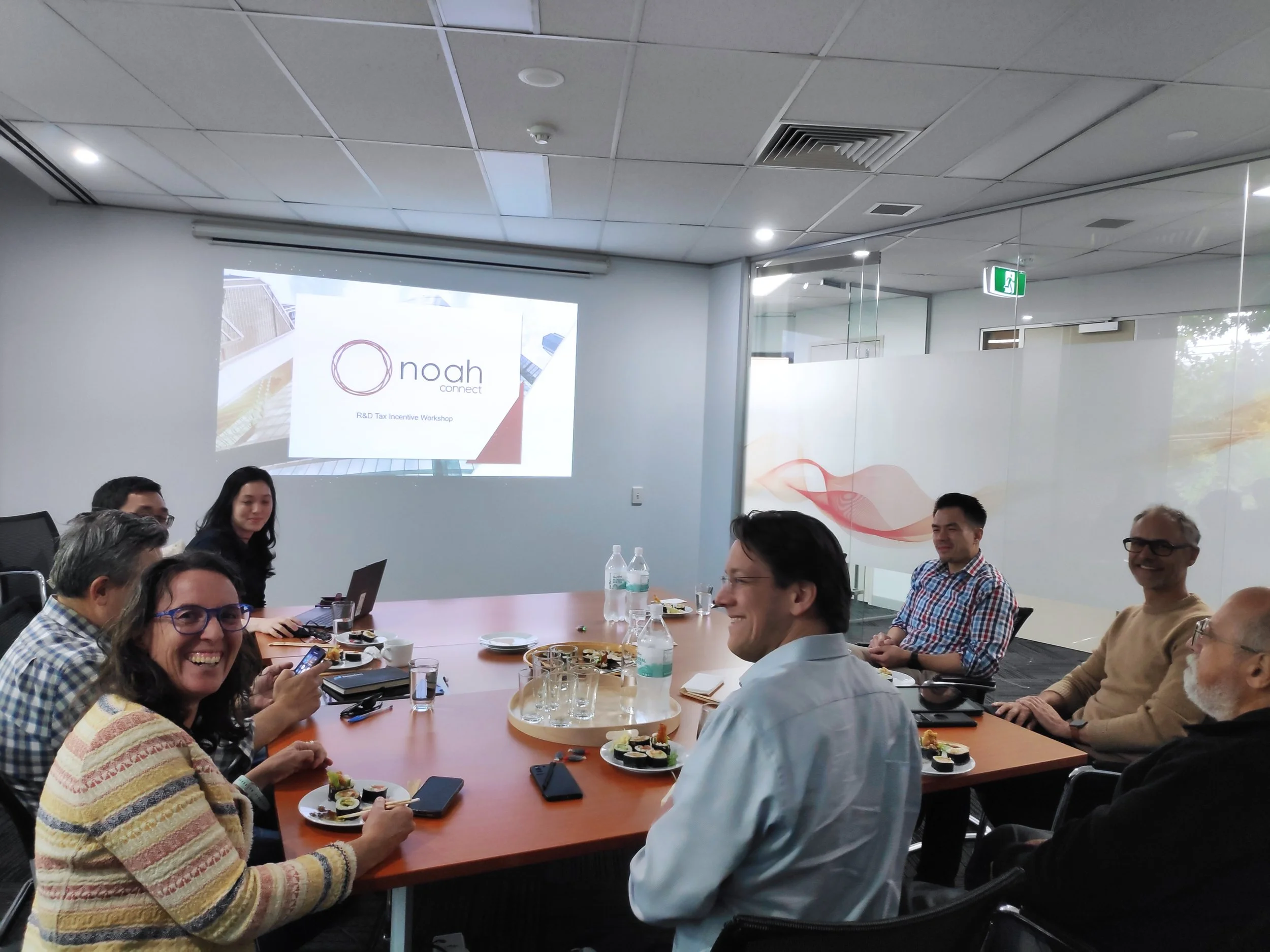
Director Maggie Ng of Noah Connect guided participants through the RDTI’s eligibility criteria, using practical examples from a founder’s perspective to illustrate how activities are assessed and highlighted the importance of record keeping.
To begin with, director Maggie Ng shared her curiosity about working with a wide range of clients and projects — from brewing innovations to satellite technologies — reflecting the diversity of businesses they support. Strong interest in their services was evident in the audience’s questions from the beginning, particularly around engagement models and grant support.
We learned that for early-stage companies, the program can offer significant support. Eligible businesses with annual turnover under $20 million may even receive a refundable tax offset, effectively returning part of their R&D expenditure as cash. However, access to the RDTI depends on undertaking genuine experimental activities where outcomes are not known in advance and new knowledge is generated.
Maggie emphasised that eligibility is assessed at the activity level, distinguishing between core R&D activities and supporting work, requiring a clear link between them. She also highlighted that the company claiming the incentive must own the R&D outcomes, be willing to commercialise them, and bear the financial risk. As with many funding programs, record-keeping is essential. Documentation should be maintained as work progresses, capturing the initial research question and the evolution of ideas, testing and results.
We also touched on more specific aspects, such as when activities conducted outside Australia may still qualify, and how different funding sources interact. A takeaway was that the RDTI can be used alongside government grants, provided claims are structured correctly and do not overlap.
The session concluded with practical guidance: while the RDTI can provide significant financial support, navigating eligibility, structuring claims and aligning with other funding sources can be complex. Engaging with specialists and building a clear understanding of requirements early on can help businesses make the most of the program while avoiding common pitfalls.
Get Involved in the Hub
We have a regular program of events and networking opportunities at the FB IDEAs Hub, and throughout Fishermans Bend. Subscribe to our monthly eNews to get updates!
You might also like to join the FB IDEAs Hub community. Located within walking distance of the future Fishermans Bend Innovation Precinct, the Hub is more than just a co-working space — it’s a community where the future is being actively built.
We offer free* co-working space (* subject to T&Cs) and the chance to be part of a growing start-up ecosystem working across cleantech, aerospace, renewables, regenerative architecture, placemaking, product design, circular economy, business consulting and much more.
Applications now open!
