Structured product development enables innovation
Product development starts with an idea. The process that follows is long and requires both endurance and a clear plan. After all, turning an idea into a commercial business is the main goal for any entrepreneur.
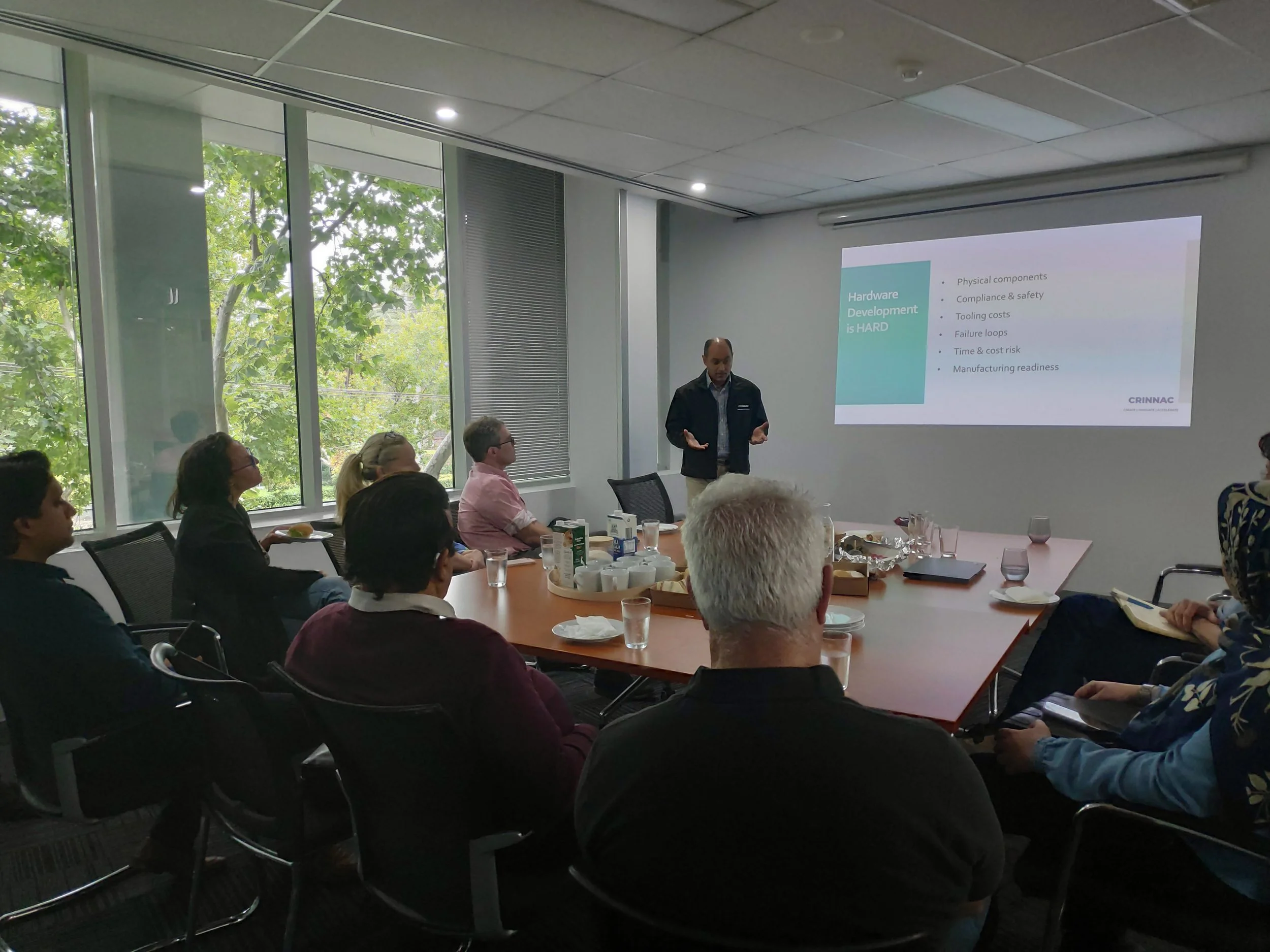
Product development expert Hamed Ghajarnia from Hub member CRINNAC walked participants through the journey from idea to product, highlighting key challenges and pitfalls along the way.
It all starts with an idea
According to Hamed, the best ideas come from people closest to the work, not necessarily at the head of a company. Their insights into process and product improvements can lead to more successful outcomes - and help confirm that a real customer need exists.
One of the commercial foundations Hamed highlighted is the importance of researching the market and identifying what already exists, how competitors travel and potential cost of the product. It is also critical to consider who needs the product and who will pay for it - often a purchasing manager rather than the individual using it.
Understanding the market is crucial. No matter how good the idea for a product might be, the assumption that millions of people will buy a product straight away is - unfortunately - often wrong. Positive experience and feedback from early adopters help to enter a market.
Prototypes: fail to fix
To create these positive experiences, Hamed pointed out that testing must happen early. Prototypes - which rarely work in the first place, but do their job by showing where fixing is required before a product hits a production line and fixes become costly - are the way to go. While concept design translates an idea into a drawing, prototyping also serves different causes. Texture, size and haptics matter to the customer as much as functionality.
Keep manufacturing in mind
From the outset, manufacturing setups and supply chain considerations need to be part of the design process. Materials choices and production processes can limit what is feasible, which can become costly when discovered late in the development process.
Among other pitfalls, Hamed highlighted the risk of building features that customers don’t need, creating products that find no market as they are released at the wrong time. Hamed showed products that were invented but never made it, and products that were released only to vanish within a season.
The session concluded on a reflective note, recognising the challenges innovators face. Bringing a new product to market requires navigating technical, commercial and operational complexities, often with significant uncertainty along the way. As Hamed noted, innovators take on considerable risk in pursuing new ideas. Innovation, ultimately, requires both persistence and courage.
Get Involved in the Hub
We have a regular program of events and networking opportunities at the FB IDEAs Hub, and throughout Fishermans Bend. Subscribe to our monthly eNews to get updates!
You might also like to join the FB IDEAs Hub community. Located within walking distance of the future Fishermans Bend Innovation Precinct, the Hub is more than just a co-working space — it’s a community where the future is being actively built.
We offer free* co-working space (* subject to T&Cs) and the chance to be part of a growing start-up ecosystem working across cleantech, aerospace, renewables, regenerative architecture, placemaking, product design, circular economy, business consulting and much more.
Applications now open!
