Advanced engineering at its finest: Digital twins and Functional Mock-up Units
In the FB IDEAs Hub lunch & learn session, Hub member Philip Oefner introduced the practical application of functional digital twins in systems development to the Hub members. Drawing from extensive experience in prototype development, he offered a glimpse into the world of complex system simulation with a view of a startup founder’s perspective.
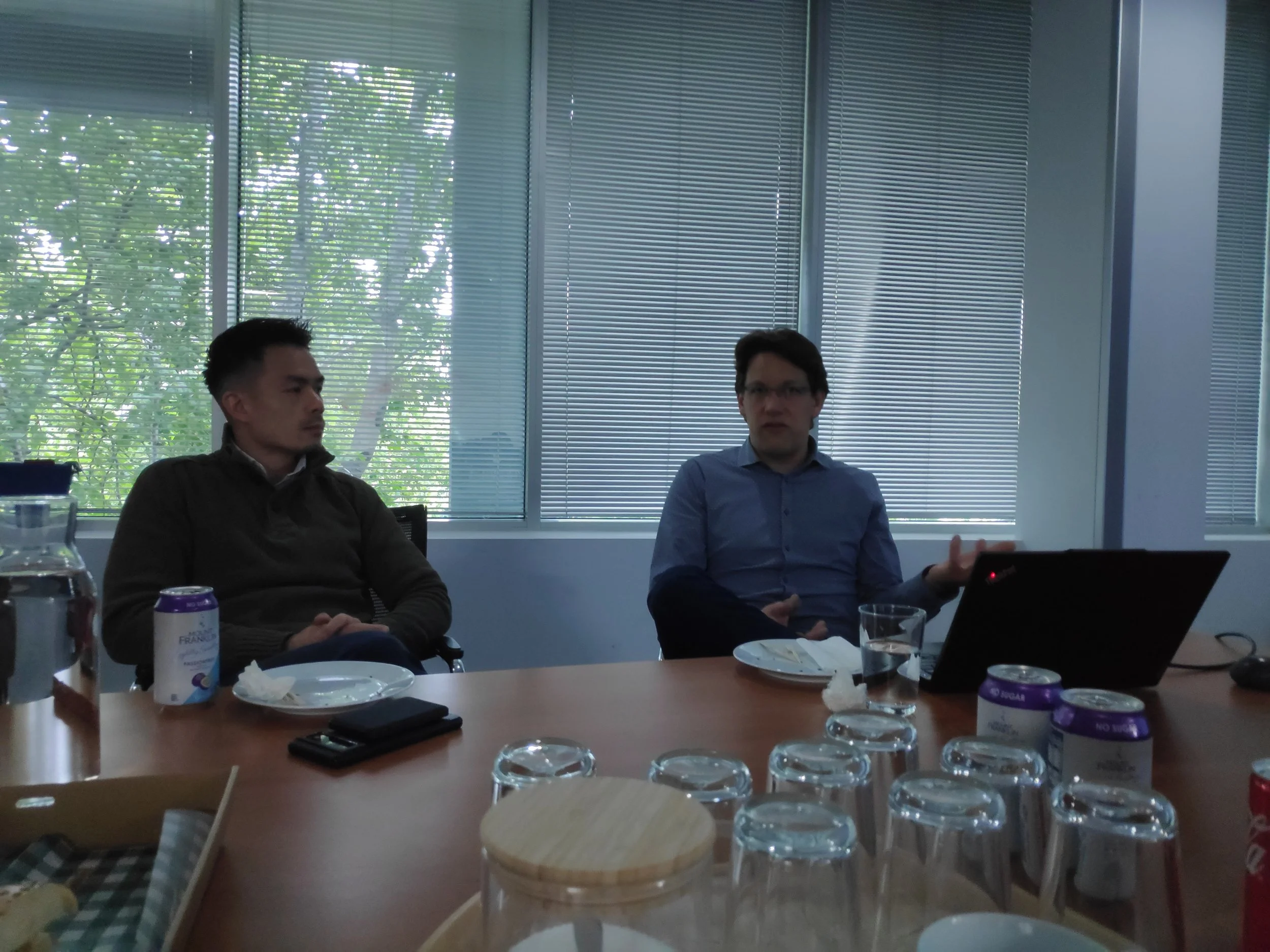
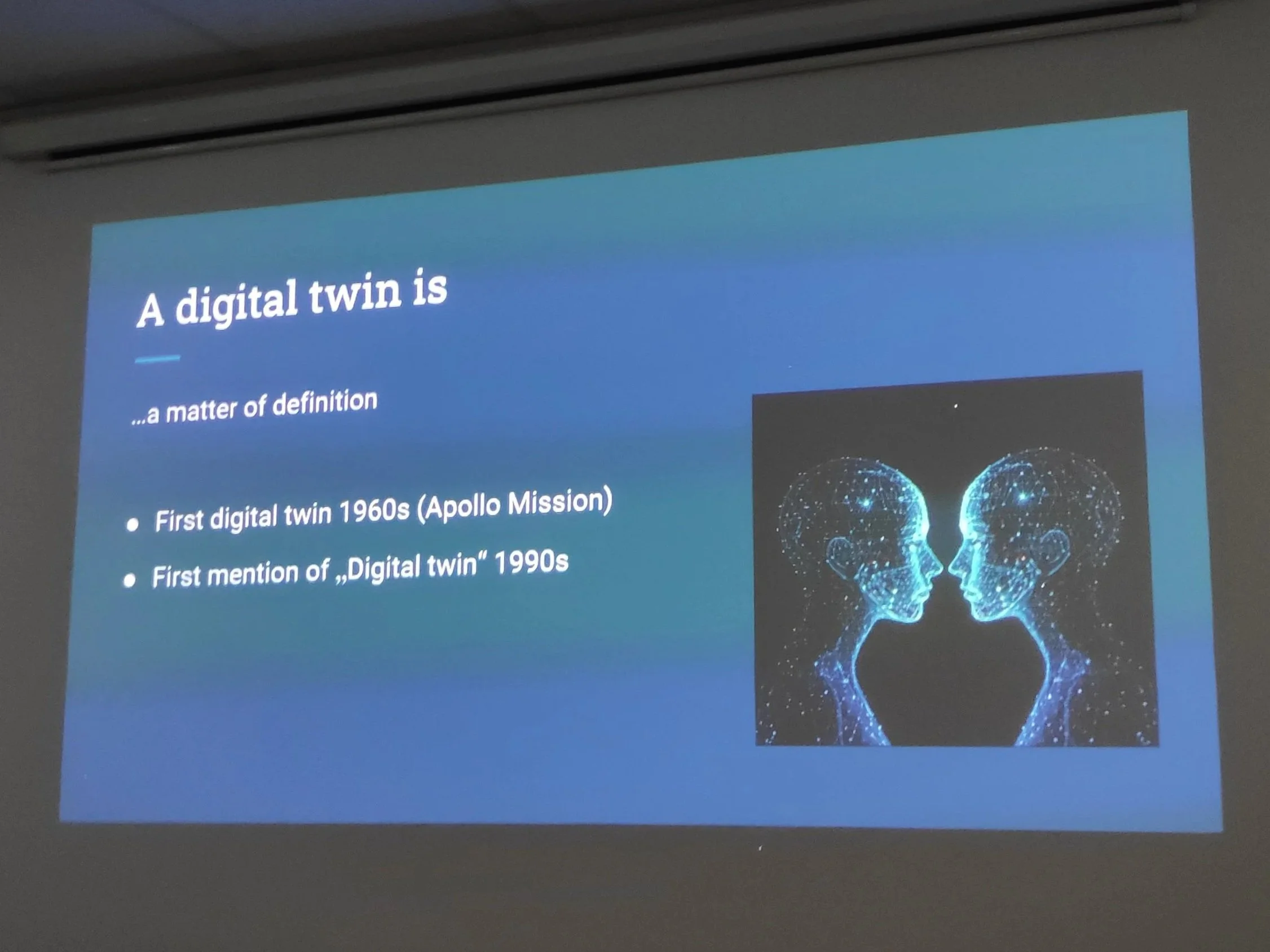
Today, digital twins seem to be used everywhere – but who can truly say what they are used for, what they look like behind the user interface, and how they compare? It was exciting to scratch the surface of this wide field in the session led by Hub member Philip Oefner from PCO engineering, an expert in the field of first-of-its-kind prototypes. We learned about the long history of digital twins – reaching back to NASA’s Apollo missions in the 1960s – the broad variety of applications in use today, and how complex systems can be simulated.
To begin with, a seemingly simple question introduced the audience to the complex topic of systems thinking: What is a system? Starting with a basic system consisting of just two components, we explored systems and their interfaces in this interactive session. Philip added complexity while clarifying the key differences between data-driven and rule-driven digital twins. This led to the omnipresent question – can’t AI do it all? The answer surprised some: It depends. AI is a great tool for data-driven digital twins. But where fundamental physical laws determine system behaviour, those laws alone will give correct answers 100% of times – so there is not always a need for AI!
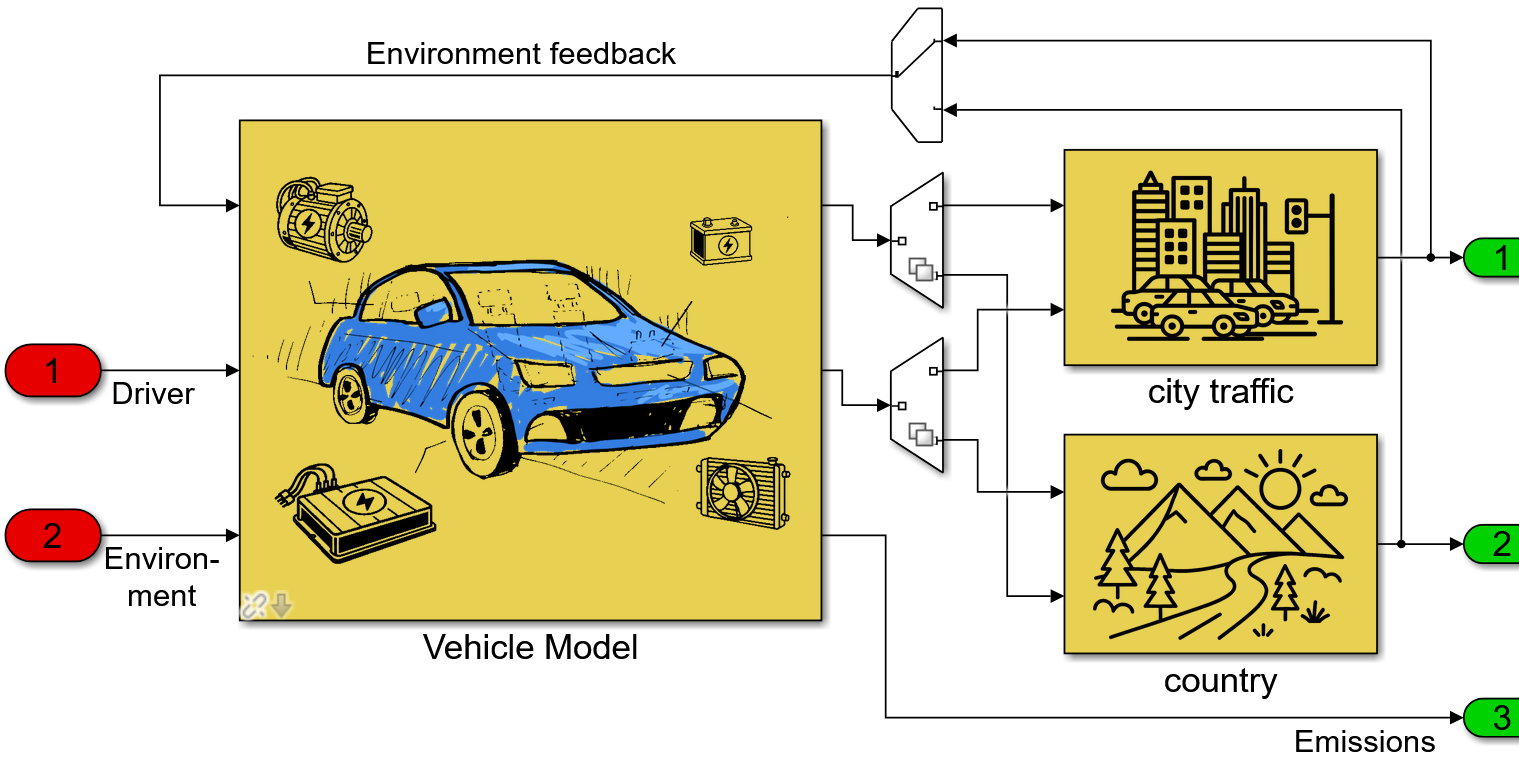
Philip Oefner explained how Functional Mock-up Units (FMUs) are used to analyse, simulate, and predict their counterpart’s real-world behaviour. He used a prototype electric vehicle - developed from components never intended to be used together, and therefore initially not “speaking” the same language - as an example of a complex system. With this, he showed how the co-developed digital twin answered critical questions and resolved issues that would have been costly to address in a physical prototype.
As for the relevant question how digital twins can be used in a startup context, the answer came down to scale: A project such as the first-of-its-kind electric vehicle from a major OEM simulated with its entire presented by the former deputy project lead would require hundreds of million euros. However, physical principles are free, many tools and programs are openly available, and a skilled simulation expert can build a digital twin that solves the purpose – while not trying to simulate the whole universe, but only the relevant parts of it.
Our take-away: Functional digital twins can be scaled and applied to virtually any dynamic system – from aerospace and electric vehicle prototypes to predictive city-traffic models, or a solar farm with its corresponding battery energy storage system.
We are excited that our Hub members can tap directly into Philip’s expertise - and even take him up on his offer for a deep dive into digital twins. Sessions like this show how powerful it can be when technical know-how meets real startup challenges, and we look forward to continuing this exchange in the FB IDEAs Hub.
Get Involved
We have a regular program of events and networking opportunities at the FB IDEAs Hub, and throughout Fishermans Bend. Subscribe to our monthly eNews to get updates!
You might also like to join the FB IDEAs Hub community. Located within walking distance of the future Fishermans Bend Innovation Precinct, the Hub is more than just a co-working space — it’s a community where the future is being actively built.
We offer free* co-working space (* subject to T&Cs) and the chance to be part of a growing start-up ecosystem working across cleantech, aerospace, renewables, regenerative architecture, placemaking, product design, circular economy, business consulting and much more.
Applications now open!
