Engineering the unknown: De-risking complex product development
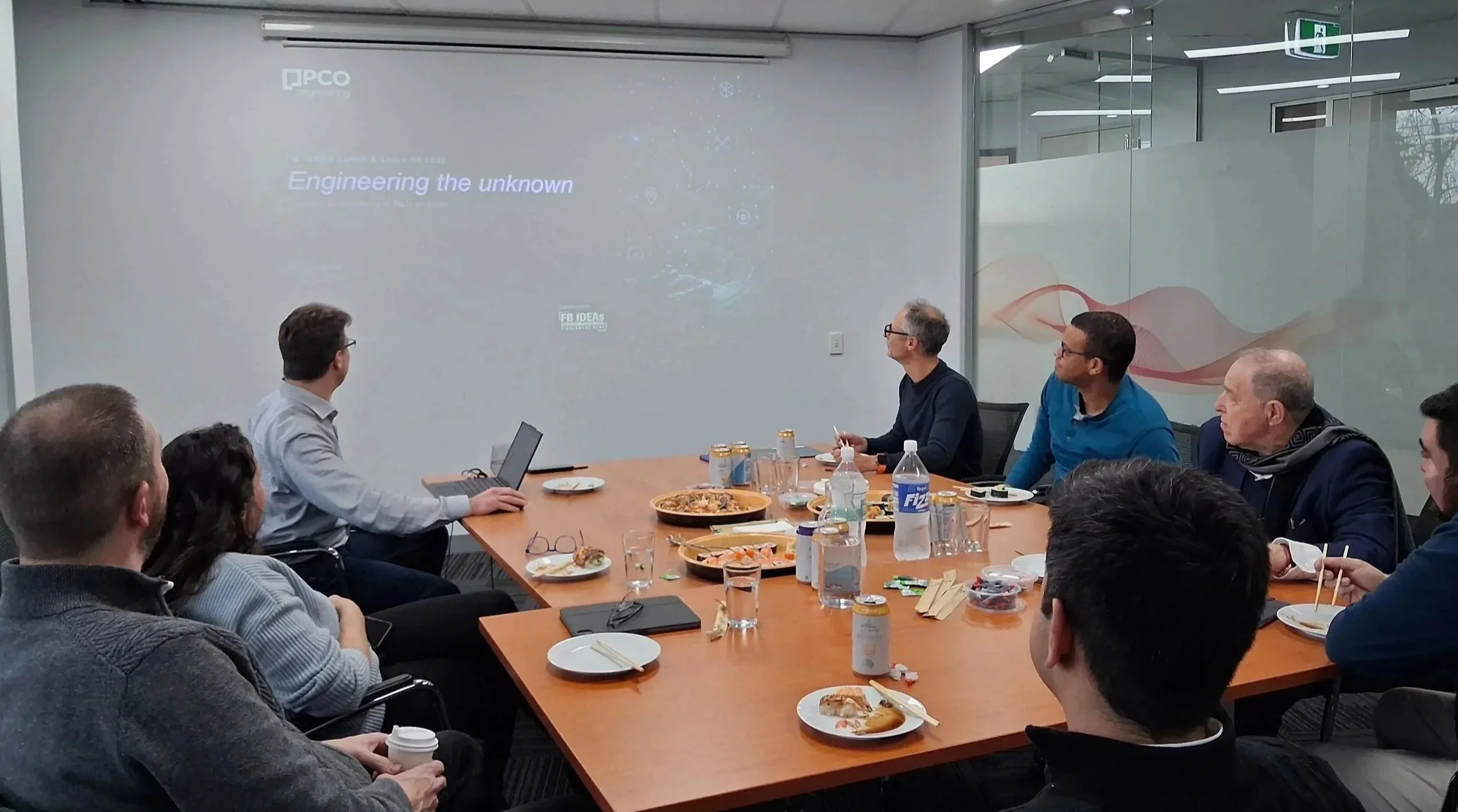
Innovators working in uncertain and rapidly evolving environments encounter constant unknowns. Philip Oefner, founder of PCO engineering, presented how implementing systems engineering principles from the very beginning of product development can help de-risk the process and minimise the cost of change.
Re-thinking unknowns
The session started with a definition of the unknowns, which come in a surprising variety when development engineers leave tested engineering grounds on their journey of inventing new technologies and world-first prototypes.
Against this background, the audience learned about the benefits of a systems architecture with clear boundaries across all levels of embedded systems. A set of methods allows the operational context and requirements to be established and deliverables clearly defined.
Turning challenges to advantages
Pointing out that developing in the realm of the unknown does not go without trial and error, Philip explained how these errors can be turned into an advantage: by turning an “unknown” into a “known” and ensuring that each mistake is only made once.
This also highlights the importance of identifying early where changes will be required and building systems accordingly. Doing so can help avoid costly impacts later in the development process – or even worse, when the product is already on the market.
Managing complexity
A highlight was hearing about Philip’s experience tackling multiple unknowns with overlapping effects caused by interdependencies between systems. These occur naturally in complex systems development, even when individual components have undergone full regulatory approval and comply with relevant standards. Their behaviour within a complex system can still come as a surprise.
Taking an electric vehicle and its digital twin as an example, the applicability of these approaches across early-stage developments of complex systems became clear. The various potential pitfalls, best encountered with long-term experience, were illustrated by a memorable example of a “leaking digital hose” – highlighting the potential issues that can arise during integration across system boundaries.
Importantly, these approaches are not limited to major OEMs or the automotive sector. They can be applied across sectors such as mobility, medtech, energy, robotics, aerospace and advanced manufacturing, with the complexity and depth of systems definitions scaled to the product and its requirements.
The key takeaway: if the cost of change is relevant, so should be proper systems engineering.
Get Involved in the Hub
We have a regular program of events and networking opportunities at the FB IDEAs Hub, and throughout Fishermans Bend. Subscribe to our monthly eNews to get updates!
You might also like to join the FB IDEAs Hub community. Located within walking distance of the future Fishermans Bend Innovation Precinct, the Hub is more than just a co-working space — it’s a community where the future is being actively built.
We offer free* co-working space (* subject to T&Cs) and the chance to be part of a growing start-up ecosystem working across cleantech, aerospace, renewables, regenerative architecture, placemaking, product design, circular economy, business consulting and much more.
Applications now open!
