More-than-human Urban Design
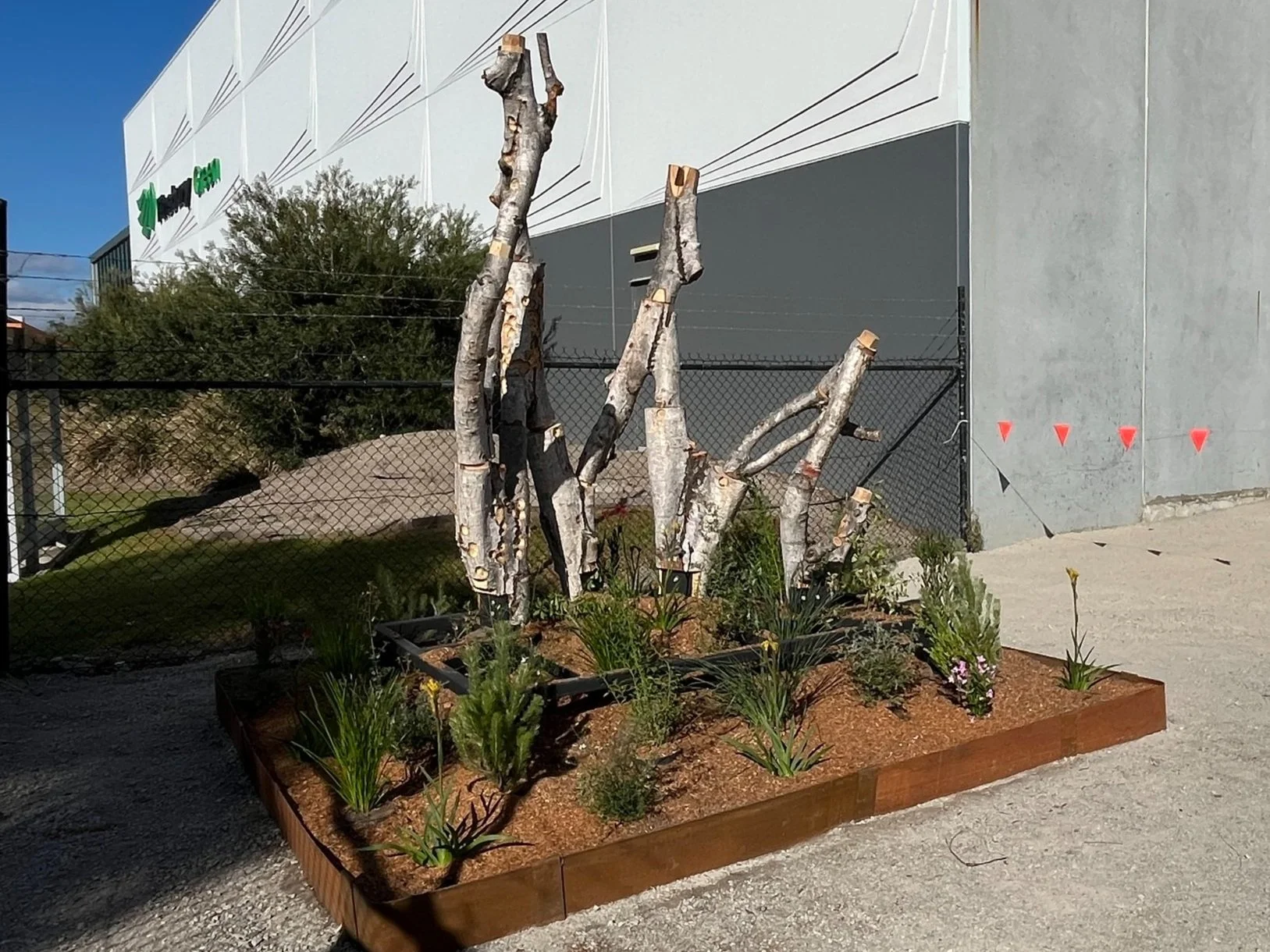
Image Credit: Tony Yu. Data provided: Flinders Judd. Spatial Information Laboratory (SI_Lab), 2024. (Supplied by Melbourne School of Design, University of Melbourne)
Going beyond our existing human-centred approaches to urban design
Led by Melbourne School of Design (MSD) at the University of Melbourne, More-than-human urban design is a collaborative project that brought together Master’s students from the Melbourne School of Design Digital Fabrication DF_Lab and Spatial Information SI_Lab elective, with researchers from the New Experimental Technologies (NExT) Lab and the ADD+F Research Hub.
Led by A/Prof Rochus Hinkel with Tony Yu and Michael Minghi Park, More-than-human urban design rethinks the built environment as a living, interdependent system. Moving beyond human-centric priorities, it recognises that thriving cities depend on the wellbeing of all species. This approach integrates ecological intelligence, digital fabrication, emerging data, and sensory worlds beyond human perception to create environments that reduce harm and foster coexistence. It values relationships between people, wildlife, and matter, reshaping design as an act of care rather than control. By mediating between technology, architecture, and ecology, eco-centric design creates resilient urban habitats where diverse life can flourish; transforming cities into places that sustain, rather than diminish, the natural world.
The MSD team and students conducted digital data collection, visualisation and analysis research at a site in Fishermans Bend and explored new forms of digital fabrication, robotics, and CNC milling.
The project is also supported by the Creative Futures Design Research and Education Fund to undertake design research at Fishermans Bend and conduct workshops for high school students from regional Victoria.
Over time, the vision for this program of work is to create a network of ‘More than human habitats’ to create networks and corridors of biodiversity habitats, traced across the post-industrial urban terrain of Fishermans Bend, and beyond.
“This project will allow our students to go deeper and explore emerging technologies that prioritise designing for biodiversity during a time of climate crisis. Using Fishermans Bend as a test case, students from Si_Lab and DF_Lab are encouraged to think beyond traditional architectural limitations to provide industry-ready solutions that protect our shared future.”
“Our partnership with FB IDEAs reflects Vaughan’s commitment to supporting emerging talent and pioneering ideas that shape the cities of tomorrow. It’s inspiring to see the University of Melbourne students and researchers using technology and creativity to reimagine how we design with nature in mind.”
Project Lead
Melbourne School of Design, at University of Melbourne
Project Partners
FB IDEAs
Vaughan Constructions
Capital V